Technical Analysis Tools
Chart patterns, indicators, and the assumptions behind technical analysis.
Technical analysis studies market behaviour through price, volume, trend, and related indicators. Unlike fundamental analysis, it does not begin by estimating the intrinsic value of a company. It begins with the market itself.
The core belief behind technical analysis is that market action contains useful information about investor psychology and supply-demand behaviour. That is why technical analysts focus on charts and patterns rather than financial statements and business forecasts.
The Three Main Inputs
Technical analysis relies mainly on three forms of market information:
- price
- volume
- time
Together, these help analysts study how a market is behaving, how strongly participants are acting, and whether a move appears to be strengthening or weakening.
Core Assumptions of Technical Analysis
Technical analysis is built on a few well-known assumptions.
Price Discounts Everything
Technical analysts often assume that available information is already reflected in market price. Instead of asking whether a company is intrinsically undervalued, they ask what the market is already signalling through its behaviour.
Prices Move in Trends
Another core assumption is that once a trend is established, it often persists until evidence of reversal appears. That is why technicians pay close attention to the start, continuation, and exhaustion of trends.
Patterns Tend to Repeat
Technical analysis also assumes that investor behaviour is not random in every respect. Fear, greed, optimism, panic, and crowd behaviour can produce recurring patterns in price action.
The exam does not require students to agree with these assumptions. It requires them to understand them.
Chart Analysis
Chart analysis is one of the most visible parts of technical analysis. Analysts study charts to identify:
- trends
- support and resistance
- reversal formations
- continuation formations
The purpose is to detect how market participants are behaving and whether that behaviour suggests likely continuation or change.
Candlestick Anatomy
Many modern charts use candlesticks rather than simple line plots because one candle captures more information about the trading session. A single candlestick shows the open, high, low, and close. That lets the analyst see both the direction of the session and how wide the intraday range was.
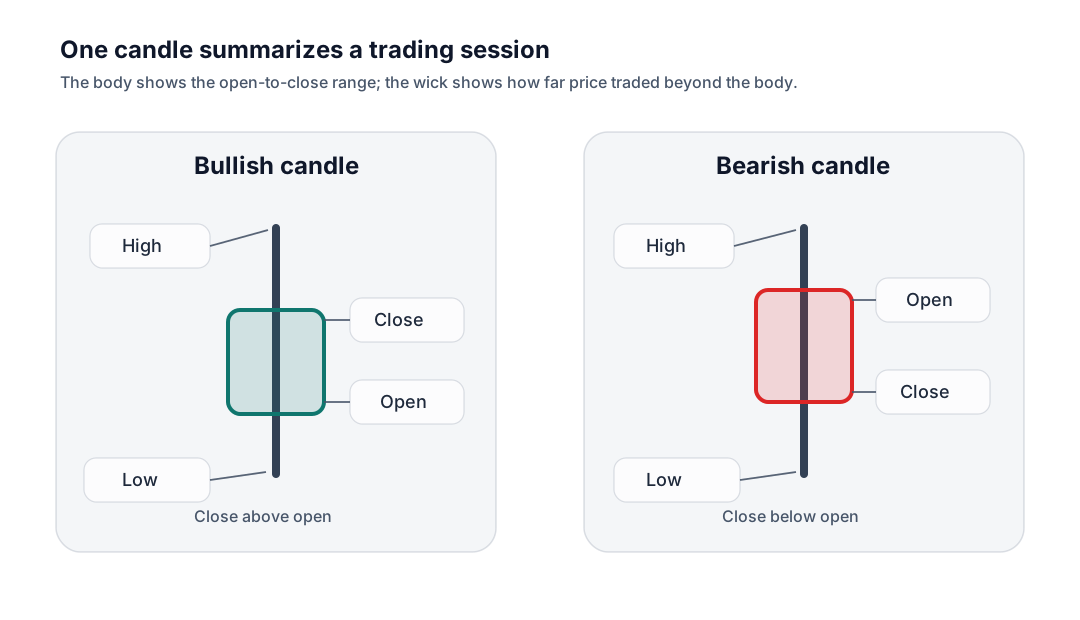
The body shows the distance between the open and the close. The wicks show how far price traded above or below that body during the session. For CSC purposes, the important point is not memorizing every named candlestick pattern. It is understanding how price structure is displayed.
Indicators and Quantitative Tools
Technical analysts also use indicators to smooth or interpret market action. Common examples include:
- moving averages
- momentum indicators
- oscillators
- breadth or sentiment measures
These tools do not guarantee correct predictions. They are simply structured ways to interpret price and volume behaviour.
Support and Resistance
Two of the most common technical concepts are:
- support, where buying interest has tended to emerge
- resistance, where selling pressure has tended to appear
These levels matter because traders often use them to judge risk, entry points, or the likelihood of a breakout or reversal.
A compact chart view makes those relationships easier to learn together than a list of terms does.
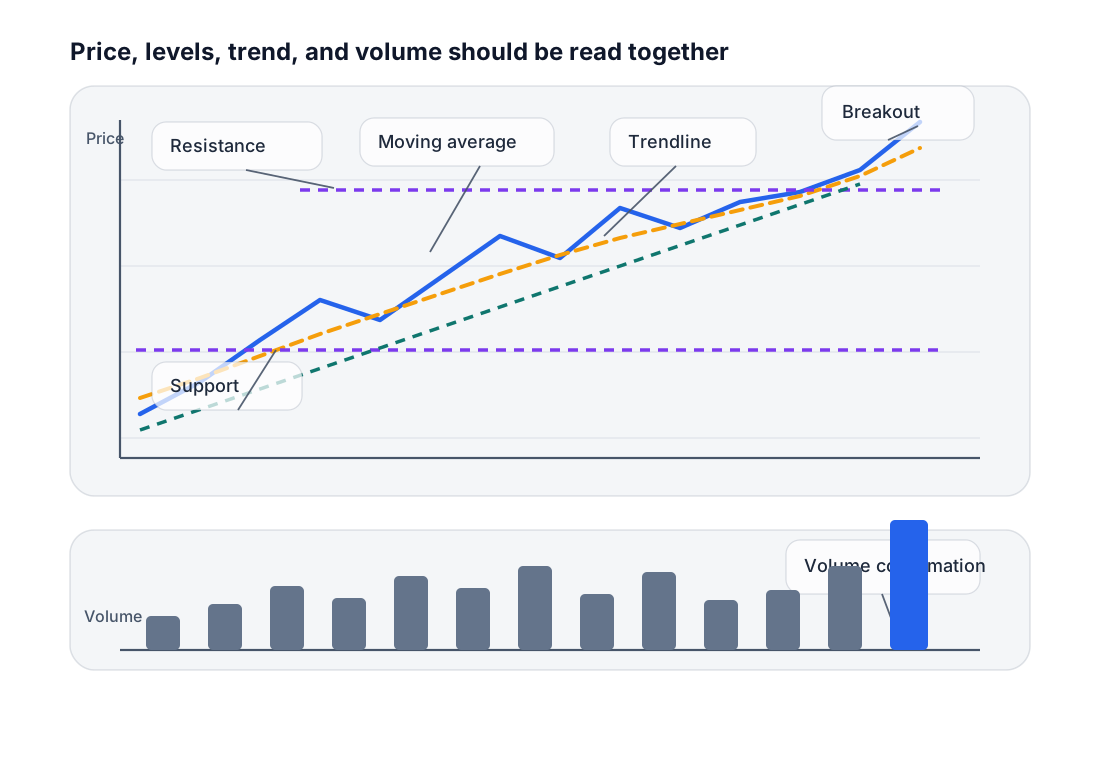
The important point is not that any single breakout guarantees success. It is that technicians read price action, key levels, trend, and volume together rather than in isolation.
Sentiment and Market Psychology
Technical analysis is closely linked to investor psychology. Market participants can become:
- fearful
- euphoric
- trend-following
- contrarian
That is why technical analysis often emphasizes sentiment as much as price structure. The market is not just reflecting information; it is also reflecting how investors feel about that information.
How Technical Analysis Differs from Fundamental Analysis
The difference is not merely one of tools. It is a difference in analytical starting point.
- Fundamental analysis starts with business and economic value.
- Technical analysis starts with market behaviour.
In practice, some investors use both. They may use fundamentals to decide what to own and technicals to decide when to buy or sell.
Limits of Technical Analysis
Technical analysis has limits, and exam questions sometimes test those limits directly.
- a chart pattern does not guarantee a future move
- sudden news can disrupt technical setups
- indicators can conflict with each other
- price action alone may not explain the business reason behind a move
The strongest exam answer usually treats technical analysis as a market-behaviour tool, not as a source of certainty.
Exam Focus
Most CSC questions here test whether you can:
- identify the assumptions behind technical analysis
- explain the role of price, volume, and time
- distinguish chart analysis from fundamental value analysis
- recognize that technical tools are used to interpret trends, momentum, and sentiment
Key Takeaways
- Technical analysis studies market action rather than intrinsic business value.
- Its main inputs are price, volume, and time.
- It is built on assumptions about trends, repeated patterns, and the information embedded in price.
- Technical tools can help interpret market behaviour, but they do not eliminate uncertainty.
Sample Exam Question
An analyst studies support levels, volume trends, and moving averages to decide whether a stock may be entering a new uptrend. Which approach is the analyst primarily using?
- A. Fundamental analysis
- B. Technical analysis
- C. Prospectus analysis
- D. Continuous-disclosure review
Best answer: B. The analyst is using chart-based and market-behaviour tools such as support, volume, and moving averages. Those are core elements of technical analysis rather than fundamental company valuation.
This part of the book lines up more closely with CSC Exam 2, so start there first. Continue with Securities Prep on the app store or google play. The app includes broader securities-exam practice beyond CSC.